
Maximum Turnitin Plagiarism/Similarity Allowed in College

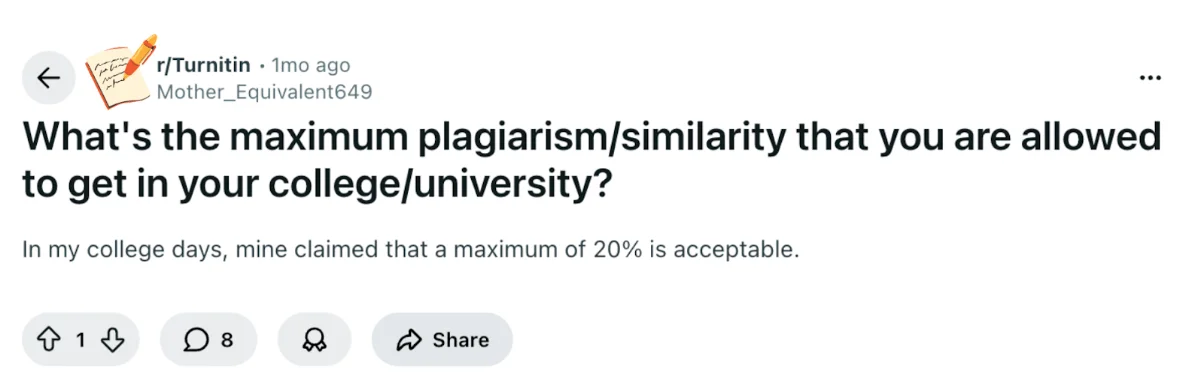
In a Reddit post, a student asked whether there’s a maximum plagiarism or similarity score colleges allow, recalling a past claim that 20% was acceptable.
That question sparked replies from instructors and students pointing out how much interpretation matters.
To make sense of the anxiety, it helps to start with a clear, practical answer before unpacking how Turnitin is actually used.
Quick Answer to Maximum Acceptable Similarity
After hearing that there’s no single rule, you’re probably wondering what you can rely on when you see a percentage on your Turnitin report.
What is the reasonable range for Turnitin similarity scores?
Direct Answer
There isn’t a fixed similarity percentage that’s automatically acceptable or unacceptable across colleges and universities.
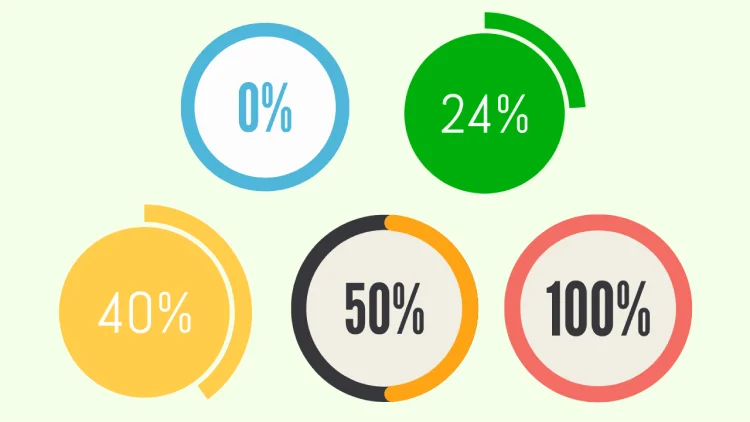
Some people mention informal benchmarks like 20% for undergraduates or lower for graduate work, but these are rules of thumb—not guarantees.
Even a very low percentage can be flagged if the matched text isn’t properly cited, while a higher percentage can be fine if it’s made up of references or quotations.
In practice, instructors use the score as a starting point to review your work, not as a final verdict.
TL;DR Bullets
There’s no universal “safe” maximum similarity score.
Percentages are signals, not automatic judgments.
Proper citations matter more than the number itself.
Low similarity can still cause issues if text is unreferenced.
Higher similarity can be acceptable when sources are used correctly.
Since the number alone doesn’t tell the whole story, understanding a few key Turnitin concepts will help you interpret what your report is actually showing.
Key Turnitin Concepts You Need for This Question
To make sense of whether a similarity percentage is “too high,” it helps to understand what Turnitin is actually showing you. The number alone can feel alarming, but it’s only one part of the report.
The Turnitin similarity score is the percentage of your submission that matches text found in Turnitin’s databases, which include student papers, academic publications, and publicly available web content.
This score does not automatically mean plagiarism in Turnitin. It simply indicates overlap, without judging whether that overlap is acceptable.
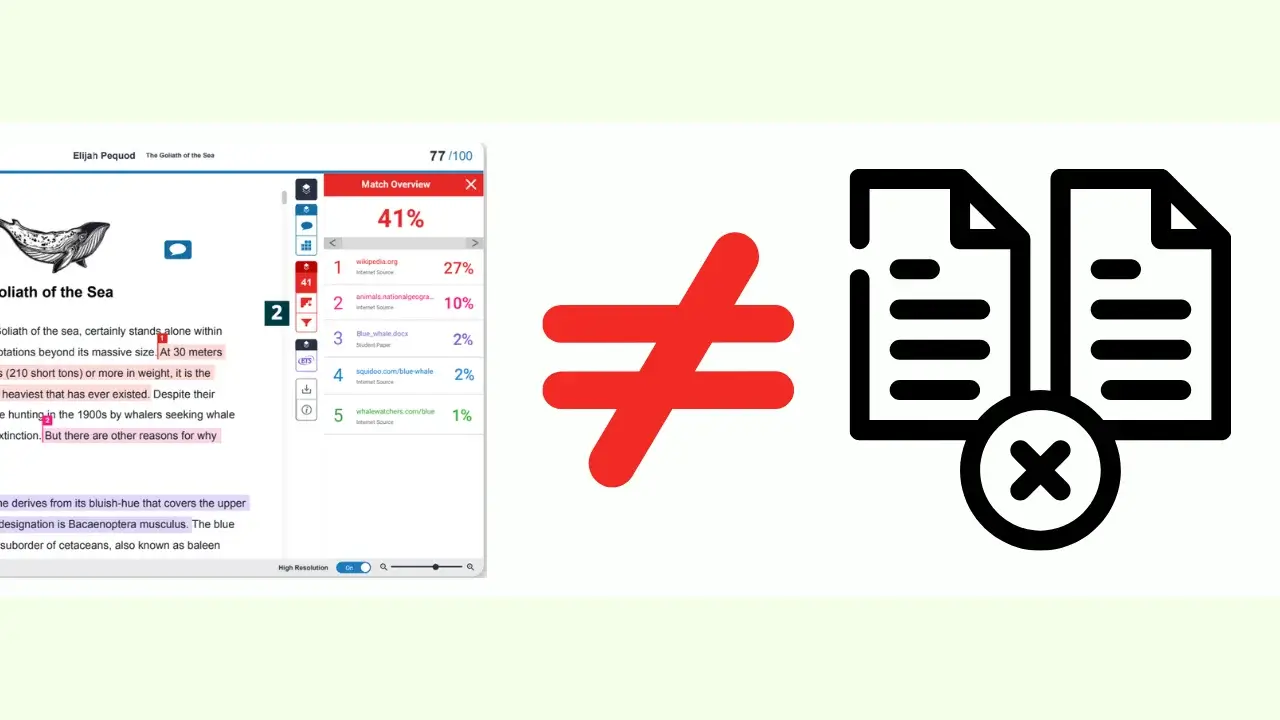
The match list breaks that percentage down into individual sources. This is where instructors usually focus their attention.
For example, matches coming from a reference list, quoted material, or common phrases may be expected and harmless, while matches from uncited paragraphs in your main text raise more concern.
Turnitin also checks against different repositories, depending on assignment settings.
These can include past student submissions, journals, or institutional databases.
What’s included can vary by institution or assignment, which is why the same paper might generate different scores in different contexts.
Some reports may also display an AI indicator, which looks for patterns that could suggest AI-generated or heavily paraphrased content.
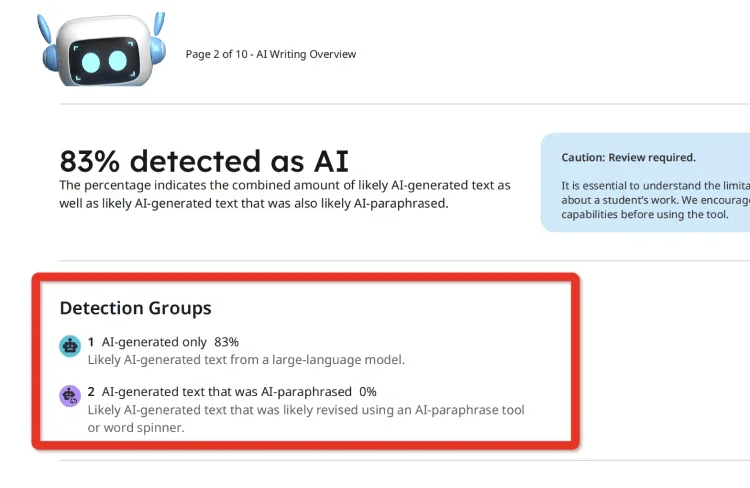
As discussed in the post, these indicators are controversial and not universally trusted. They’re typically meant to prompt closer review, not serve as proof on their own.
Taken together, these concepts explain why there’s no single “safe” percentage. Turnitin provides signals, and humans—usually your instructor—interpret what those signals actually mean.
How Instructors Actually Use Turnitin Scores
Once you understand what a similarity score represents, the next layer is how instructors interpret it in real situations.
Most don’t treat the percentage as a strict pass-fail line. Instead, they use it as a screening tool to decide whether anything in your paper needs a closer look.
Several instructors in the discussion pointed out that low scores aren’t automatically “safe,” and higher scores aren’t automatically a problem.
A paper showing 30% similarity might be fine if the matches come from properly cited sources, quotes, or a reference list.
On the flip side, even a 1% match can raise concerns if that text is uncited or closely copied from a source.What really matters is context.

Instructors often click into the matched passages to see how the text is used, whether sources are acknowledged, and whether the writing shows original understanding rather than surface-level paraphrasing.
Policies can also vary by institution or assignment, and some instructors have more flexibility than others.
That’s why similarity scores are best seen as conversation starters, not final judgments—they help instructors decide where attention is needed, not what outcome is guaranteed.
Bonus Tip: Reliable Turnitin Detectors
If you’re feeling uncertain about your Turnitin report, using a Turnitin detector like Turnitindetector (T-detector) can provide you with the reassurance you need.

Key Benefits:
Turnitin Similarity Report – Get an accurate preview of your similarity score, helping you identify sections that may need revision before submission.
Turnitin AI Content Detection – Turnitindetector also checks for content that might have been influenced by AI tools, showing you exactly what your professor would see in their review.
No Risk of Submission – Your paper isn’t stored or submitted anywhere, so you don’t have to worry about it being added to any database, ensuring it won’t impact your final submission’s similarity score.
Turnitindetector gives you the confidence to submit your work knowing you've checked all the right boxes.
Conclusion:
Worrying about a “maximum” Turnitin similarity score is understandable, but the core answer is that no single percentage guarantees safety or trouble.
Similarity scores are guides that depend on context, citations, and instructor review, and even low numbers can raise questions if sources aren’t handled well.
Your best next step is simple and practical: review your match list, make sure every borrowed idea is clearly cited, and focus on explaining things in your own words. That approach does more for you than chasing a specific percentage ever will.