
How Does Turnitin Detect AI in Student and Professional Work

When submitting papers or professional documents, many people wonder how does Turnitin detect AI and whether their work could be flagged.
Confusion arises because AI detection in Turnitin is not always transparent, leaving students and general users uncertain.
This article will clarify the detection process, explain key signals Turnitin uses, and provide practical insights to interpret results accurately, helping readers approach submissions with confidence.

How Turnitin Identifies AI-Generated Text
Turnitin’s advanced AI analysis and linguistic pattern recognition are used to flag potentially AI-generated text.
The system compares writing style and probability metrics to determine if AI was likely involved.
This means that even well-written, original content can be evaluated for patterns consistent with AI output, such as repetitive phrasing, unnatural sentence structure, or atypical vocabulary usage.
Machine Learning Models Behind Turnitin AI Detection
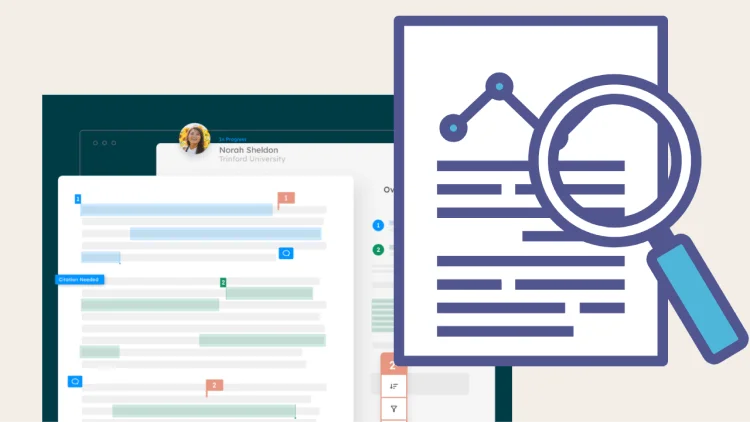
Turnitin’s AI detection relies on trained machine learning models that analyze large datasets of human and AI-generated writing.
These models detect subtle differences in sentence construction, word choice, and coherence that are statistically more common in AI-produced text.
The system continuously updates its models to keep pace with new AI writing tools and techniques, improving accuracy over time.
Linguistic and Writing Pattern Analysis
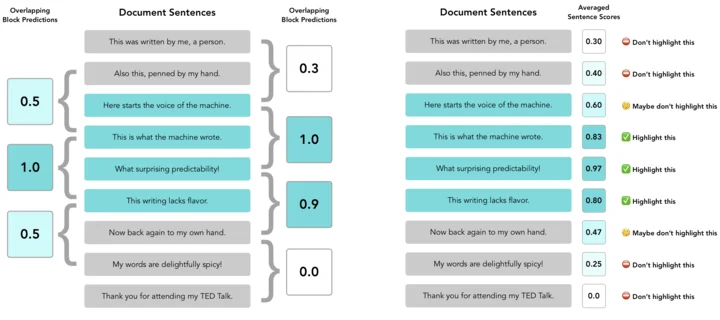
Turnitin examines the style and flow of the text, including syntax, punctuation, and word frequency patterns. It compares these elements against established baselines for human writing to identify anomalies.
For example, unusually uniform sentence lengths or overuse of transitional phrases may signal AI involvement. This linguistic analysis is combined with statistical assessments to provide a confidence score for potential AI authorship.
Integration with Similarity Reports
AI detection is integrated into the Turnitin similarity score report, allowing instructors to view AI flags alongside matched sources. This helps distinguish between content flagged for AI-generated patterns and content that matches published materials.
Students and professionals can review both similarity percentages and AI indicators to better understand how Turnitin evaluates their work.
These detection methods form the foundation for Turnitin’s AI analysis, but accuracy can vary depending on the complexity and style of the submitted text. Understanding these mechanisms is crucial before examining the factors that influence Turnitin AI detection accuracy.
Factors That Influence Turnitin AI Detection Accuracy
Several elements affect how accurately Turnitin identifies AI-generated text. Understanding these factors helps students and professionals interpret AI flags more effectively and reduces confusion when a submission appears flagged unexpectedly.
Text Complexity and Sentence Structure
Turnitin evaluates sentence length, grammar patterns, and overall text complexity. Highly uniform or overly simple sentence structures can increase the likelihood of AI detection, while more varied and nuanced writing often aligns with human patterns.
For example, essays with varied sentence lengths, natural transitions, and occasional stylistic inconsistencies are less likely to trigger AI flags.
Source Material and Citations
Proper citation of sources influences AI detection because Turnitin differentiates between copied text and original writing.
Text that heavily relies on direct quotations or paraphrasing may appear less “AI-like,” while content with minimal source integration or formulaic phrasing could raise detection signals. Ensuring accurate citations and diverse sources helps maintain clarity in Turnitin reports.

Use of AI-Assisted Editing
Even minor AI-assisted edits, like grammar suggestions or rephrasing tools, can alter text patterns enough to affect Turnitin’s AI analysis.
Submissions edited with AI tools may show subtle linguistic fingerprints that the system interprets as AI involvement. Writers should review revisions carefully and ensure that the final work maintains their natural writing style to reduce false positives.
These factors demonstrate that Turnitin’s AI detection is influenced by both how the text is written and how it is prepared. Recognizing these influences sets the stage for understanding the differences in AI detection between student and professional submissions.
Differences in AI Detection for Students vs. Professionals
Turnitin’s AI detection approach is not one-size-fits-all; it adapts to the context of the submission. Recognizing these differences helps users anticipate how their work may be evaluated and respond appropriately to AI flags.
Academic Submissions
In academic settings, Turnitin evaluates essays, research papers, and assignments with a focus on originality and adherence to expected student writing patterns.
Student work is often compared against large databases of prior submissions, published papers, and AI-generated examples.
This allows the system to flag content that deviates from typical student writing, such as highly formal or unusually consistent sentence structures.
Workplace or General Writing Submissions
For professional or general writing, Turnitin accounts for the varied writing styles common in reports, emails, and articles.
Since professional documents often include standardized formatting, templates, or industry-specific language, the system adjusts its AI sensitivity to reduce false positives. Nevertheless, text that appears overly uniform or artificial may still trigger AI indicators.
How Detection Sensitivity Varies
Detection sensitivity changes based on both the type of submission and the context in which Turnitin is applied. Academic assignments typically undergo stricter scrutiny, while professional submissions may be assessed with slightly more leniency.
Understanding these variations helps writers interpret AI flags accurately and take appropriate steps if their work is flagged.
Awareness of these differences prepares users to review AI signals effectively and leads naturally into learning how to interpret Turnitin AI flags within the detailed report interface.
Interpreting Turnitin AI Flags in Reports
After understanding how Turnitin detects AI and the factors that influence detection, the next step is interpreting the flags in your report.
Clear interpretation helps students and general users take informed action and avoid unnecessary concern over false positives.
Understanding AI Confidence Scores
Turnitin assigns a confidence score indicating the likelihood that a text was AI-generated. Higher scores suggest stronger AI signals, while lower scores indicate uncertainty.
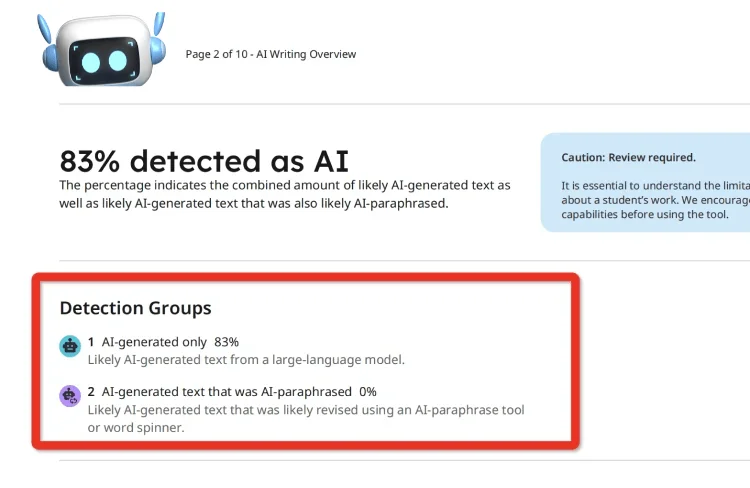
Users should view these scores alongside other report elements, such as similarity percentages and matched sources, rather than relying solely on the AI indicator.
Distinguishing AI Signals from Plagiarism Matches
AI flags and plagiarism matches are separate metrics in Turnitin reports. AI detection identifies writing patterns typical of AI output, while plagiarism matches indicate text copied from existing sources.
Reviewing both together helps clarify whether flagged content is potentially AI-generated or simply overlaps with cited materials.
Best Practices After Receiving a Flag
If a submission is flagged for AI, review the highlighted sections carefully and confirm your work aligns with your own writing style.
Consider revising sentences that may appear overly uniform or formulaic and ensure all sources are properly cited. Communicating with instructors about flagged sections and providing context can also prevent misunderstandings.
Properly interpreting AI signals ensures users respond effectively and prepares them for common questions and clarifications covered in the next section.
FAQ
1. What Percentage of AI Is Acceptable on Turnitin?
Turnitin does not set a universal “acceptable” AI percentage. Instructors decide how much AI assistance, if any, is allowed for assignments. A low AI confidence score may be permissible, but it depends on your institution’s policies.
2. Does Turnitin Flag Human Writing Mistakenly as AI?
Yes, Turnitin can sometimes flag original human writing. Highly structured, uniform, or edited text may resemble AI patterns, so reviewing context and instructor guidance is important.
3. What Is a 20% AI Score on Turnitin?
A 20% AI score indicates that the system detected moderate signals of AI-like patterns in the text. This does not automatically mean the work was generated by AI—it suggests closer review is warranted.
4. Can Editing Reduce the Chance Turnitin Detects AI?
Yes, careful human editing can reduce AI detection signals. Varying sentence structure, using natural transitions, and maintaining your own voice helps the text align with typical human writing patterns.
5. How Does Turnitin Know If You Used AI?
Turnitin analyzes linguistic patterns, sentence structures, and writing style to identify signals typical of AI-generated text. It compares the submission against trained machine learning models to estimate likelihood.
6. How Does Turnitin Integrate AI Detection with Plagiarism Checks?
Turnitin displays AI indicators alongside similarity reports. This allows instructors to see both potential AI-generated content and matches to existing sources, helping distinguish between AI use and plagiarism.
Conclusion
Understanding How Does Turnitin Detect AI is essential for students and professionals submitting written work. This article explored the AI detection methods, including machine learning models, linguistic analysis, and integration with similarity reports.
It also covered factors that influence detection, differences between academic and professional submissions, and how to interpret AI flags effectively.
Being informed about these processes helps writers approach Turnitin submissions confidently, reduce misunderstandings, and maintain clarity and integrity in their work.