
Turnitin Score: How to Understand and Improve Your Results

Many students and writers encounter the term Turnitin score when submitting papers and wonder what the number actually means.
Confusion often arises about how it’s calculated, what counts as high or low, and how to address matches.
This article will clarify how Turnitin score works, what influences it, and how to interpret results to improve your submissions. Keep reading to gain a clear understanding.

What Is a Turnitin Score? Direct Answer and Explanation
A Turnitin score represents the percentage of your text that matches other sources in Turnitin’s database. It helps identify potential overlap with published material, online content, or previously submitted student papers. Understanding this percentage allows you to assess originality and review sections that may need clearer paraphrasing or citation.
In some institutions, Turnitin also provides AI Writing Metrics alongside the similarity score. These metrics estimate the percentage of text that may display characteristics associated with AI-generated or AI-paraphrased content. Unlike the similarity score, Turnitin AI writing indicator tool analyze writing patterns rather than source matches. Both percentages are reported separately and serve different review purposes.
How Turnitin Calculates Scores
Turnitin calculates the similarity score by comparing submitted text against its extensive database of academic publications, student papers, and online sources using pattern-matching algorithms.
Exact matches, substantial phrase overlaps, and closely aligned text structures can all contribute to the overall percentage. While quotations and bibliographies may be flagged, they are typically identified separately, allowing instructors and students to determine whether matches are properly cited or need revision.
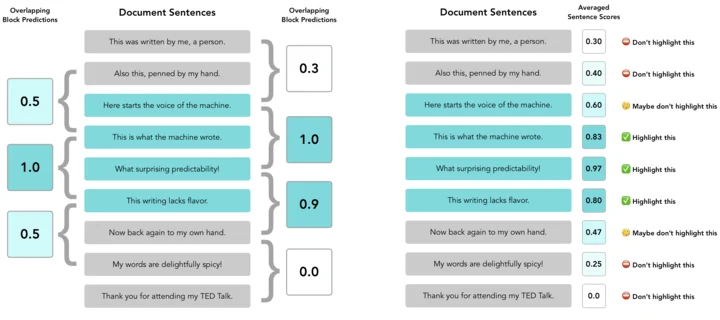
Unlike the similarity score, AI metrics do not compare your work to external sources. Instead, they analyze linguistic patterns—such as sentence predictability, structural consistency, and statistical language features—to estimate the percentage of text that may be AI-generated or AI-paraphrased. These AI percentages are calculated independently and reported separately from the similarity score.
Importance for Students and General Writers
Understanding a Turnitin score allows both students and general writers to gauge originality before submission. It informs decisions about revising sections, improving paraphrasing, and ensuring proper citations.
Reviewing the score early can prevent inadvertent overlaps and supports producing credible, academically responsible work.
Recognizing what a Turnitin score represents sets the stage for examining the specific factors that influence it, including source matches, citations, and writing style. These elements determine how high or low your score may appear in reports.
Factors That Affect Your Turnitin Score
Matching Text from Sources
Turnitin score is influenced heavily by how much of your text matches content in its database. Exact phrases, sentences, or sequences that appear in published articles, student papers, or online sources increase the score.
Even a few repeated sentences from widely available material can be flagged, so understanding which sections of your work align with external sources is critical for interpreting your results.

Quotations, Citations, and References
Properly formatted quotations and references are still detected in a Turnitin report and contribute to your score. Turnitin highlights these matches to provide context, but correctly cited material is generally acceptable.
Writers should check that all quotes and sources are properly attributed, as improper or missing citations can artificially inflate the Turnitin score.
Paraphrasing vs. Original Writing
How closely you paraphrase original material affects your Turnitin score. Light rewording may still be flagged if sentence structure or unique phrases match existing content.
Original writing and thoughtful paraphrasing reduce overlap, helping maintain a lower score while preserving meaning. Reviewing flagged areas and adjusting phrasing can improve both clarity and originality.
Understanding these factors helps you anticipate why certain sections raise your Turnitin score. With this knowledge, you can better interpret reports and apply strategies to improve your results when reviewing your document.
How to Check and Interpret Your Turnitin Score
Understanding Similarity Reports
Turnitin provides a similarity report that breaks down the percentage of matched text in your submission. Each match is linked to its original source, allowing you to see which sections contributed most to your Turnitin score.
The report categorizes matches by source type, such as journals, student papers, or internet content, helping you quickly identify areas that may require review.

Identifying Critical Matches
Not all matches carry the same weight in evaluating originality. Critical matches include large blocks of text copied from a single source, improperly cited material, or repeated phrases that could suggest plagiarism. Focusing on these high-impact matches lets you prioritize which sections to revise or rephrase to reduce your Turnitin score effectively.
Using Turnitin Tools for Clarity
Turnitin offers tools like color-coded highlights, side-by-side source comparisons, and filters to exclude bibliographies or quotes. These features help distinguish between acceptable overlaps and areas needing attention.
Regularly using these tools allows both students and general writers to interpret their Turnitin score accurately and make informed decisions about revisions.
By understanding and analyzing the similarity report, you can pinpoint problem areas and take targeted steps to improve your submission, setting up practical strategies for reducing overlap in your writing.
Tips for Improving Your Turnitin Score
Proper Citation Techniques
Accurate citations are essential for maintaining a responsible Turnitin score. Use the citation style required by your instructor or publication consistently throughout your work.
Include all necessary details for quotes, paraphrases, and references so Turnitin can distinguish properly attributed material from potential overlaps. Checking citations before submission prevents unintentional score inflation.
Effective Paraphrasing
Paraphrasing correctly reduces similarity without losing meaning. Focus on rewording ideas entirely rather than just swapping a few words, and restructure sentences while keeping the original message intact.

This approach lowers your Turnitin score and demonstrates a genuine understanding of the material.
Reducing Unnecessary Matches
Avoid including large blocks of commonly used phrases, repeated examples, or overly generic text that might match multiple sources.
Remove redundant sections and summarize information concisely when possible. These steps minimize non-critical matches, helping ensure your Turnitin score reflects originality more accurately.
Applying these strategies consistently prepares your submission for a more favorable Turnitin score, while keeping your work clear, properly cited, and demonstrably original.
FAQ
1. What Is Considered a Good Turnitin Score?
A good Turnitin score is generally below 20%, indicating minimal overlap with existing sources. Acceptable ranges can vary by instructor, institution, or type of assignment.
2. Is 40% Bad on Turnitin?
A 40% Turnitin score is usually considered high and may trigger a review. It suggests significant matching content that should be checked for proper citation or rephrasing.
3. Does a High Turnitin Score Mean My Work Is Plagiarized?
Not necessarily. Turnitin flags matches but does not determine plagiarism. Properly cited quotes or common phrases can raise your score without indicating misconduct.
4. How Accurately Does Turnitin Score Reflect Originality?
Turnitin score reflects text similarity, not originality alone. It identifies overlaps, but interpretation depends on context, citations, and proper paraphrasing.
5. What Does a Turnitin Score Mean?
A Turnitin score shows the percentage of your document that matches content in Turnitin’s database. It highlights potential overlaps to guide revisions and ensure proper attribution.
Conclusion
Understanding your Turnitin score is essential for producing original and properly cited work. This article explained what a Turnitin score represents, how it is calculated, and the factors that influence it, including matching text, citations, and paraphrasing.
We also covered how to check reports, interpret results, and apply practical strategies to improve your score.
By following these guidelines, students and general writers can confidently manage their Turnitin score and submit work with clarity and academic integrity.